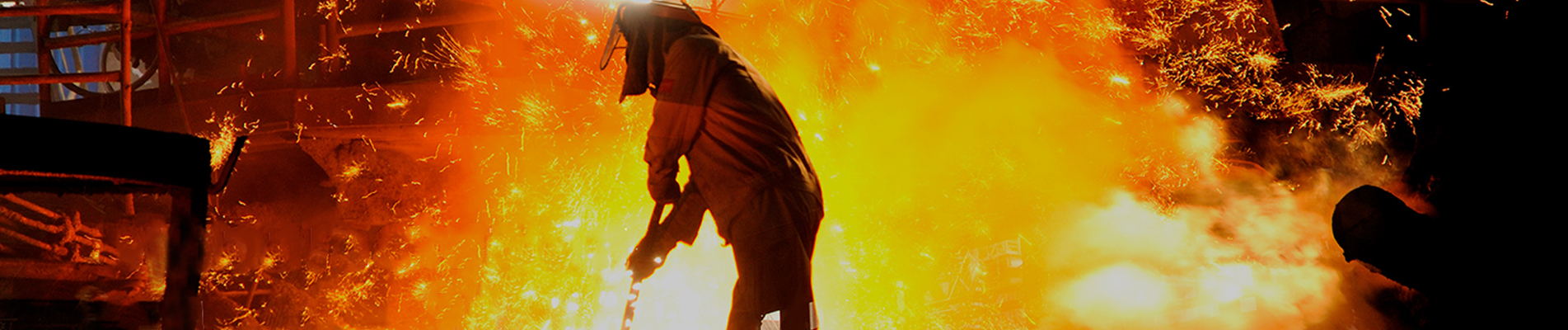
Fiberglass welding blankets can look similar in a product list while performing very differently in daily industrial use.
The difference is often not the fiberglass itself, but what has been done to the surface.
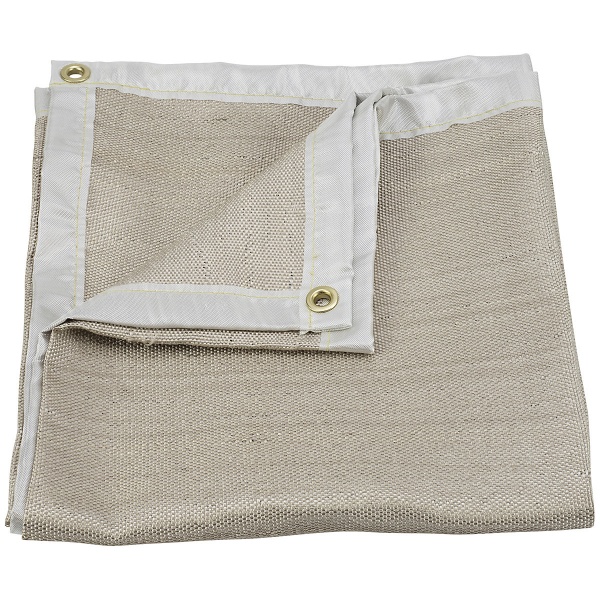
A heat-cleaned fiberglass welding blanket has no polymer coating added for surface protection. An acrylic coated fiberglass welding blanket uses an acrylic treatment to improve handling and surface durability. A silicone coated fiberglass welding blanket adds a tougher elastomeric surface for applications where abrasion, moisture, repeated handling and workshop contamination are more important.
None of these constructions is automatically the best choice for every welding application.
The correct selection depends on the welding or cutting process, spark and spatter level, blanket position, handling frequency, required service life and the environment in which the blanket will be used.
BSTFLEX supplies industrial welding blankets in heat-cleaned, acrylic coated, silicone coated and other high-temperature constructions for OEM, distributor and industrial applications.
| Construction | Main Characteristic | Typical Buying Reason |
|---|---|---|
| Heat-Cleaned Fiberglass | Uncoated woven fiberglass surface | Economical general welding and spark protection |
| Acrylic Coated Fiberglass | Fiberglass with an acrylic surface treatment | Improved handling, abrasion resistance and reduced fiber shedding |
| Silicone Coated Fiberglass | Fiberglass with a silicone rubber coating | Greater surface durability, moisture resistance and repeated-use performance |
This comparison describes the general purpose of each construction. Actual performance also depends on fabric weight, thickness, coating weight, welding conditions and finished blanket design.
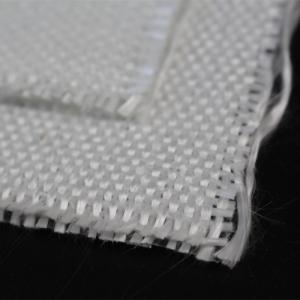
In welding blanket terminology, uncoated fiberglass generally refers to fiberglass fabric that does not have an acrylic, silicone or similar polymer surface coating.
One commonly used version is heat-cleaned fiberglass.
During fiberglass fabric manufacturing, yarns may contain processing finishes that assist weaving. Heat-cleaning removes much of this organic processing material and produces a textile better suited to high-temperature industrial applications.
The resulting blanket retains the woven fiberglass surface rather than covering it with a polymer layer.
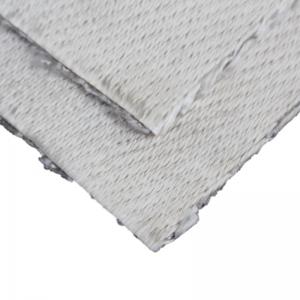
BSTFLEX supplies the Heat Cleaned Fiberglass Welding Blanket for general welding, fabrication and industrial maintenance applications.
For buyers using large quantities of welding protection material, uncoated fiberglass can also be attractive because unnecessary coating cost is avoided when the operating environment does not require a more durable surface.
Heat-cleaned fiberglass should be considered when the application mainly requires a heat-resistant textile barrier and the blanket will not experience unusually severe abrasion or contamination.
Typical applications can include:
The actual suitability still depends on fabric weight, distance from the heat source, blanket position and expected spatter level.
The exposed fiberglass weave is one reason buyers sometimes move to a coated construction.
Compared with a coated surface, plain fiberglass may be more susceptible to abrasion during repeated dragging, folding and installation. Loose surface fibers can also make handling less comfortable in applications where blankets are moved frequently.
Operators handling fiberglass textiles should use appropriate gloves and follow workplace handling procedures.
This does not mean that coated fiberglass is always thermally superior. It means that coating can improve certain surface and handling characteristics.
An acrylic coated fiberglass welding blanket uses woven fiberglass as the structural base and adds an acrylic coating or treatment to the surface.
The coating changes how the fabric behaves during handling without changing the fact that fiberglass remains the principal reinforcement.
BSTFLEX supplies the Acrylic Coated Fiberglass Welding Blanket for industrial welding and hot-work protection where buyers want greater surface durability than plain fiberglass.
Depending on coating formulation and amount, acrylic treatment can improve:
This makes acrylic coated fiberglass particularly useful when a basic uncoated blanket is wearing too quickly during normal workshop handling.
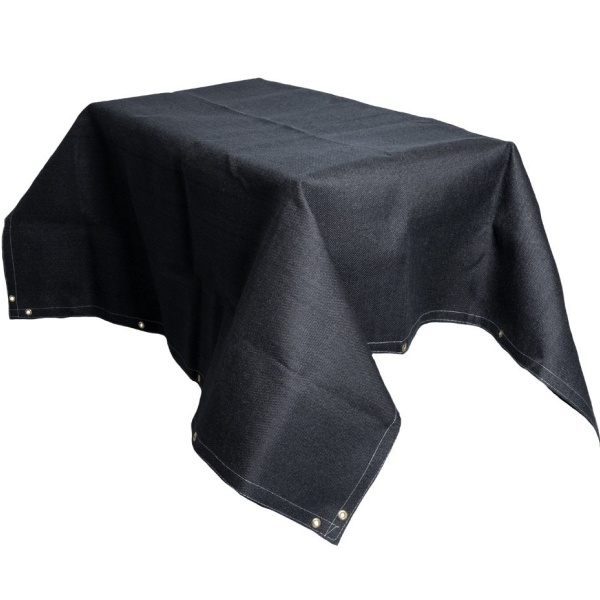
Acrylic coated fiberglass generally occupies a useful position between plain heat-cleaned fiberglass and a more heavily coated silicone construction.
It can be considered for:
For a distributor, acrylic coated fiberglass can also provide a useful middle product category between economical uncoated fiberglass and premium silicone coated material.
A silicone coated fiberglass welding blanket consists of woven fiberglass fabric with silicone rubber applied to the surface.
The fiberglass provides the structural textile base, while the silicone coating changes the surface behavior of the finished material.
BSTFLEX supplies the Silicone Coated Fiberglass Welding Blanket for demanding industrial environments where surface durability, flexibility and resistance to workshop contamination are important.
A silicone coated surface can provide advantages such as:
These characteristics can be especially valuable where a welding blanket is reused frequently rather than installed once for temporary protection.
A common purchasing mistake is to treat a silicone coated welding blanket as if the entire blanket were made from silicone.
It is not.
The construction includes at least two important material systems:
Each material has its own temperature behavior.
A high temperature capability associated with fiberglass should not automatically be assigned to the silicone coating. Likewise, the presence of silicone does not automatically mean the complete blanket can withstand a higher working temperature than every uncoated fiberglass construction.
Buyers should ask for the service temperature of the finished construction and understand whether a published number refers to the base fabric, coating or complete product.
For a detailed explanation, see High Temperature Welding Blankets: Temperature Ratings and Material Selection.
The choice between heat-cleaned and acrylic coated fiberglass is often driven by durability and handling rather than by a simple maximum-temperature comparison.
| Selection Factor | Heat-Cleaned Fiberglass | Acrylic Coated Fiberglass |
|---|---|---|
| Surface | Exposed fiberglass weave | Acrylic treated surface |
| Cost Position | Generally more economical | Additional coating increases processing |
| Abrasion Resistance | Suitable for routine handling | Improved for repeated handling |
| Fiber Shedding | More exposed fiberglass surface | Coating helps stabilize the surface |
| Typical Use | General welding and temporary protection | Routine industrial use requiring greater durability |
If an uncoated blanket already performs well and does not experience excessive wear, adding a coating may not provide enough value to justify the additional cost.
If blankets are repeatedly dragged, repositioned or handled, acrylic coating may offer a practical upgrade.
The difference between acrylic and silicone is not simply “good” versus “better.”
The correct choice depends on what problem the coating needs to solve.
| Selection Factor | Acrylic Coated Fiberglass | Silicone Coated Fiberglass |
|---|---|---|
| Main Reason to Select | Economical improvement in surface durability | More demanding repeated-use environment |
| Abrasion Resistance | Improved over plain fiberglass | Generally selected where stronger surface durability is required |
| Moisture Resistance | Depends on coating formulation | Silicone surface provides useful moisture resistance |
| Oil and Workshop Contamination | Suitable for many normal workshop conditions | Often selected where oil and industrial contamination are greater concerns |
| Handling Frequency | Routine industrial use | Frequent installation, removal and reuse |
| Cost Position | Intermediate option | Typically higher than simple acrylic or uncoated constructions |
The actual coating formulation, coating weight and base fabric specification should always be confirmed before making a technical comparison.
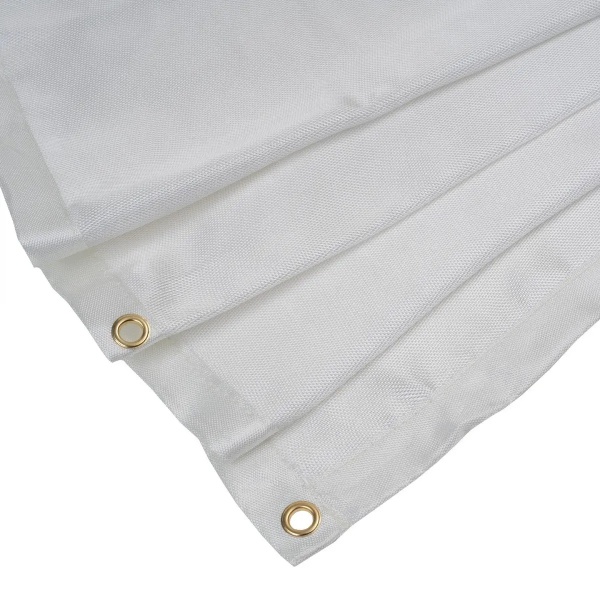
Not automatically.
This is one of the most important points when comparing coated and uncoated fiberglass welding blankets.
A coating can improve surface durability, abrasion resistance, moisture resistance or handling properties while having a lower temperature limit than the fiberglass underneath it.
Therefore, buyers should not assume:
more coating = higher temperature rating.
The thermal performance of a welding blanket must be considered as a complete material system.
If the application requires temperatures beyond the practical range of fiberglass-based constructions, the buyer may need to evaluate silica or another high-temperature textile rather than simply selecting a heavier coating.
See our Welding Blanket Materials Guide for a broader comparison of fiberglass, silica, silicone coated fabrics, aluminized materials and carbon felt.
Coating can change how hot particles interact with a fabric surface, but this should not be reduced to a universal statement that every coated blanket provides superior protection against every type of spatter or slag.
Performance depends on:
For demanding slag or molten-spatter exposure, ask for product-specific performance information rather than choosing by coating name alone.
Flexibility matters because industrial blankets often need to be draped over machinery, wrapped around irregular components, folded for storage or repeatedly installed and removed.
Heat-cleaned fiberglass remains relatively simple and flexible because there is no heavy polymer coating on the surface.
Acrylic coating can stabilize the fabric while retaining useful handling characteristics.
Silicone coated fiberglass can provide a smooth and flexible surface, but coating amount and fabric thickness influence the final drape.
For custom equipment protection, request a sample when flexibility around a particular geometry is important.
When comparing quotations, do not evaluate only the total weight of the finished fabric.
Two products can have the same finished weight while containing different proportions of fiberglass and coating.
A useful specification should identify:
This makes it much easier to compare competing quotations on a like-for-like basis.
Another purchasing detail is whether the coating is applied to one surface or both surfaces.
A single-side coated construction may be sufficient when the coated face is deliberately positioned toward the operating environment.
A double-side coating provides similar surface characteristics on both faces but can change weight, flexibility and cost.
When specifying a single-side coated welding blanket, indicate which side should face the welding or workshop environment if orientation is important.
Distributors serving several customer groups may benefit from carrying more than one fiberglass welding blanket construction.
A practical product range can include:
This allows sales teams to match the product to the customer's working environment instead of selling every customer the same construction.
Roll materials can also be supplied for distributors or fabricators that manufacture finished blankets locally.
OEM buyers should first define the application rather than selecting a coating from a catalog.
Useful information includes:
For repeat OEM programs, an approved specification should identify both the fiberglass base and coating rather than allowing substitution between coated and uncoated materials without review.
| If Your Priority Is... | Construction to Evaluate First |
|---|---|
| Economical general welding protection | Heat-cleaned fiberglass |
| Simple uncoated welding blanket | Heat-cleaned fiberglass |
| Improved surface durability at moderate cost | Acrylic coated fiberglass |
| Reduced exposed fiber surface | Acrylic or silicone coated fiberglass |
| Frequent handling and reuse | Silicone coated fiberglass |
| Moisture and workshop contamination resistance | Silicone coated fiberglass |
| Temperature beyond the selected fiberglass construction | Evaluate silica or another higher-temperature material |
This table is a selection starting point rather than a substitute for application review.
BSTFLEX can supply fiberglass welding blanket materials as roll goods or manufacture finished blankets according to project requirements.
Available customization can include:
Standard reference sizes such as 6x6, 6x8, 8x8 and 10x10 ft can be produced, while other dimensions can be manufactured according to customer requirements.
Heat-cleaned fiberglass is an uncoated fiberglass construction that has undergone thermal cleaning to remove much of the organic processing material used during textile manufacturing. It should still be specified by actual fabric grade, weight and thickness.
A coating can improve surface durability, abrasion resistance, handling characteristics and resistance to moisture or workshop contamination. The exact benefit depends on whether acrylic, silicone or another treatment is used.
Not in every application. Acrylic coated fiberglass can be a practical choice when improved surface durability is required at a moderate cost. Silicone coated fiberglass is often selected for more demanding repeated handling and environments involving moisture, oils or industrial contamination.
Heat-cleaned or otherwise uncoated fiberglass generally provides the simplest construction and is commonly evaluated first for economical general welding protection. Final cost depends on fabric weight, size, finishing and quantity.
Do not assume so. The fiberglass substrate and silicone coating have different thermal limits. Use the specified service conditions of the complete finished material rather than applying the fiberglass fiber temperature directly to the coating.
Yes. BSTFLEX can manufacture acrylic coated fiberglass welding blankets in custom sizes and finished constructions according to project requirements.
Roll material and custom finished configurations can be supplied according to the selected fabric specification, width, coating and quantity.
When requesting a quotation, tell BSTFLEX whether your priority is economical spark protection, improved abrasion resistance, frequent reuse, resistance to workshop contamination or another operating requirement.
If the correct surface treatment is not known, provide the welding process, expected heat and spatter exposure, blanket position, handling frequency, finished dimensions and required quantity.
BSTFLEX can compare heat-cleaned fiberglass, acrylic coated fiberglass and silicone coated fiberglass welding blankets and recommend a suitable construction for the application.
View the complete BSTFLEX welding blanket range or contact us for custom OEM, roll material and bulk purchasing requirements.

 English
 français
 Deutsch
 русский
 italiano
 español
 português
 Nederlands
 العربية
 日本語
日本語 한국의
한국의 Türkçe
 Polski
 Tiếng Việt
 Indonesia