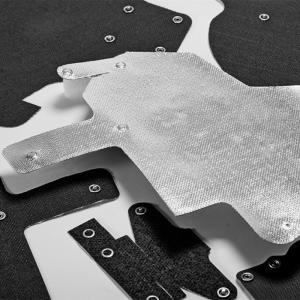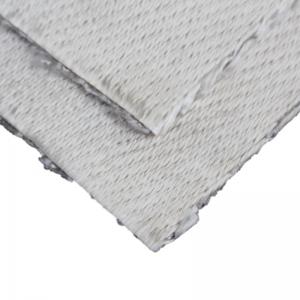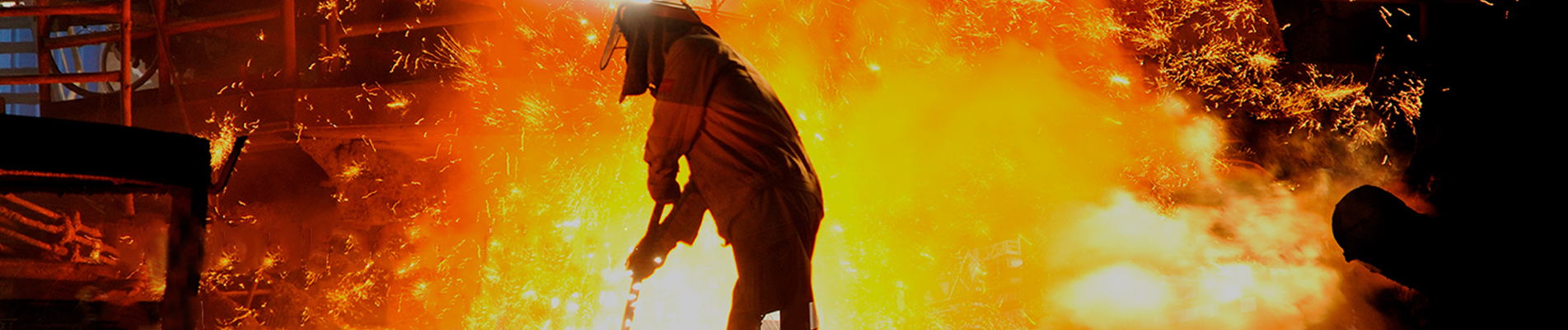
Vermiculite coated fiberglass fabric can be used in removable insulation covers when a flexible textile layer must tolerate higher temperatures, hot abrasion and repeated thermal exposure. Its most suitable position is not automatically the outside of the jacket. Depending on the equipment and blanket design, it may serve as a hot-face liner, an insulation-retaining cloth, a reinforcement layer or a protected inner fabric.
The correct layer position matters because every part of a removable insulation jacket performs a different function. The hot-side fabric faces the equipment, the insulation core limits heat transfer, the outer shell protects the assembly from handling and environmental exposure, and the seams and closures keep the cover serviceable.
BSTFLEX supplies Vermiculite Coated Fiberglass Fabric in several weights and thicknesses for industrial fabrication. Complete custom covers are available through the Removable Insulation Blankets range.
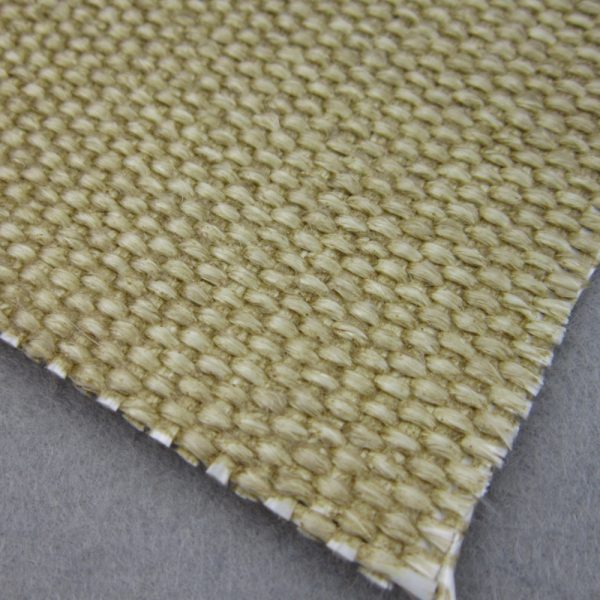
Evaluate vermiculite coated fiberglass when the proposed fabric layer is exposed to higher temperature, radiant heat, direct contact with hot equipment, hot abrasion or a more severe thermal environment than a conventional polymer-coated outer fabric should experience.
Typical positions include:
For outdoor jackets or covers exposed to oil, moisture, weather and repeated handling, a suitable Silicone Coated Fiberglass Fabric is often evaluated for the external shell while vermiculite fiberglass remains in the hotter internal position.
| Jacket layer or component | Main function | Key selection questions |
|---|---|---|
| Hot-face liner | Faces the equipment or the hottest side of the assembly | What temperature reaches the liner? Is there direct contact, radiant heat, vibration or abrasion? |
| Insulation-retaining cloth | Contains and supports the insulation core | Does it need flexibility, dimensional stability or resistance to fiber migration? |
| Insulation core | Reduces heat transfer through the jacket | What thickness, density and temperature capability are required? |
| Reinforcement or mesh | Adds support and helps maintain the blanket shape | Will the cover experience vibration, repeated removal or concentrated loads? |
| Outer shell | Protects the jacket against handling and the external environment | Is the jacket indoors or outdoors? Will it contact water, oil, chemicals or cleaning agents? |
| Seams and closures | Hold the cover together and allow removal | Are the thread, straps, buckles, hooks or lacing suitable for their local temperature and load? |
Vermiculite coated fiberglass can support several of these functions, but the material name does not define the entire jacket construction. The fabric should be specified by its exact position and duty.
A hot-face liner is the fabric closest to the hot equipment. This position can expose the textile to conductive heat, radiant heat, vibration, sharp edges, scale and repeated thermal cycling.
Vermiculite coated fiberglass is a practical candidate when:
BSTFLEX Vermiculite Coated Fiberglass Fabric is published for high-temperature applications up to approximately 815°C / 1500°F depending on exposure time, heat source, installation and working conditions. This figure applies to the selected fabric grade, not automatically to the completed blanket.
A valve, flange, pipe or exhaust component may have a surface temperature that differs from the temperature measured elsewhere in the process. The fabric may also experience local hot spots around bolts, flanges, welds, supports or gaps in the insulation.
For material selection, identify:
Do not select the fabric from process-fluid temperature alone. The temperature at the actual liner position is the more relevant value.
A fabric suitable for high-temperature contact is not automatically the best external jacket material. The outside of a removable cover may need resistance to rain, oil, cleaning, routine handling and repeated folding.
Vermiculite coated fiberglass has a dry mineral-treated surface selected mainly for thermal protection and hot abrasion. Silicone coated fiberglass provides a rubber-coated surface more commonly chosen for moisture resistance, oil resistance, weather exposure and repeated handling.
A typical multilayer arrangement may therefore use:
| Position | Possible material | Primary reason |
|---|---|---|
| Hot face | Vermiculite coated fiberglass or another qualified high-temperature textile | Higher-temperature exposure and hot abrasion |
| Core | Fiberglass, silica, ceramic-fiber or another selected insulation material | Heat-loss reduction and surface-temperature control |
| Outer shell | Silicone coated fiberglass or another suitable cover fabric | Handling, moisture, oil and environmental protection |
| Reinforcement | Mesh, additional fabric or localized reinforcement | Shape retention and load distribution |
This is not a universal recipe. The layer arrangement must be selected for the actual equipment, environment and maintenance routine.
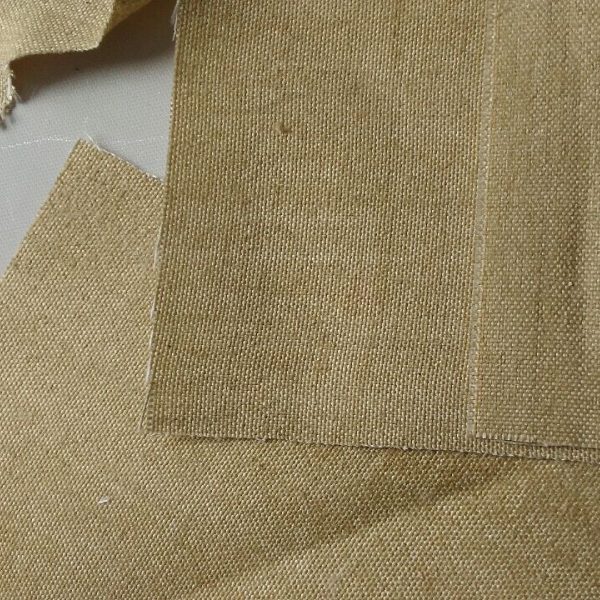
It can be used as an outer layer in suitable indoor or protected applications where high-temperature resistance is more important than weatherproofing. However, it should not automatically replace a coated external shell in wet, oily or outdoor conditions.
Before using it on the outside, evaluate:
A water-resistant fabric alone does not make a finished jacket waterproof. Seams, closures, cutouts, penetrations and overlap direction remain part of the assembly design.
BSTFLEX supplies standard vermiculite coated fiberglass fabric from approximately 0.8 mm to 3.0 mm. The correct thickness depends on flexibility, abrasion, mechanical support, fabrication and the required thermal barrier.
| Nominal thickness | Nominal weight | Possible removable-cover use |
|---|---|---|
| 0.8 mm | 615 g/m² | Lightweight liner, flexible wrapping or general heat-shield layer |
| 1.0 mm | 816 g/m² | General removable-cover fabrication and pipe or valve liner applications |
| 1.5 mm | 1020 g/m² | Medium-duty liner, heat-containment panel or equipment cover |
| 2.0 mm | 1380 g/m² | Heavier thermal barrier and higher-abrasion internal layer |
| 2.5 mm | 1680 g/m² | Severe-duty insulation blanket or heavy thermal-shield layer |
| 3.0 mm | 1900 g/m² | Heavy-duty thermal protection where weight and seam bulk remain acceptable |
These are selection starting points rather than universal application limits. A heavier cloth may improve durability and thermal mass, but it can also increase blanket weight, seam thickness and resistance to bending around small equipment.
Increasing fabric thickness does not multiply the approved service temperature. Temperature capability depends on the fiber, treatment, construction and exposure conditions.
A thicker grade may provide:
It may also create:
Approve the material in a representative fabricated sample rather than choosing the heaviest available cloth by default.
The hot-face fabric and the insulation core should be selected together. The liner must be able to contain, support or protect the chosen insulation without creating unnecessary stiffness or wear.
Confirm:
The cover's thermal performance comes mainly from the complete insulation system. Vermiculite fiberglass is a fabric layer; it should not be treated as a substitute for the required bulk insulation thickness.
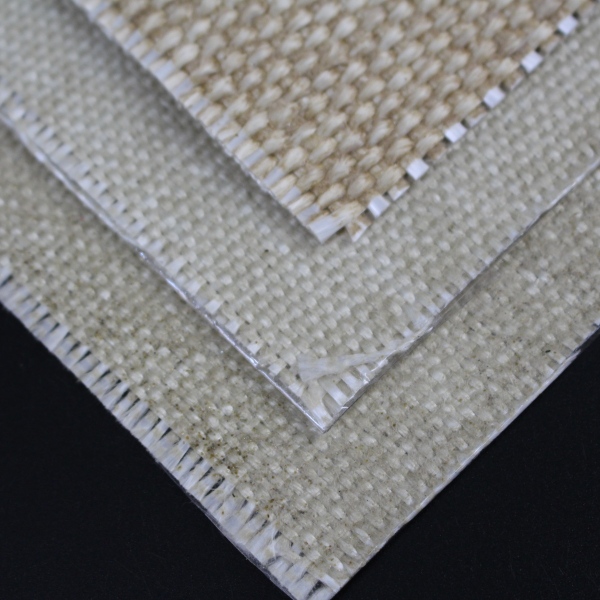
A high-temperature liner can fail at a lower-rated seam if the sewing thread or seam construction is not suitable for the local conditions.
The fabrication specification should identify:
Where practical, keep critical seams away from direct contact with the hottest surface or a sharp equipment edge.
A valve cover must fit around the body, bonnet, stem, actuator and adjacent flanges while preserving access for operation and maintenance. Use the layer specification to address local hot spots near the bonnet, flange edges and piping connections.
The liner should not interfere with valve movement or access to inspection points. For complete custom assemblies, review the Removable Insulation Blankets category and the available valve-cover configurations.
Flange covers often experience concentrated heat around the joint and bolts. The pattern should allow inspection or leakage monitoring required by the site while protecting the insulation from sharp flange edges.
Where the cover is removed frequently, review wear at the split line, overlap and closure points. Local reinforcement may be more effective than increasing the weight of every panel.
Exhaust components can combine high temperature, vibration and radiant heat. Identify whether the liner will touch the surface and whether movement may cause rubbing. The selected fabric, insulation core, reinforcement and attachment system should be reviewed as a complete assembly.
Pumps, heat exchangers, turbines, reactors and other equipment may require sectioned jackets so that only the necessary panel is removed during service. Panel divisions affect seam placement, overlap and the number of closures.
Provide equipment drawings or photographs showing brackets, instruments, nozzles and access panels before the fabric pattern is approved.
A cover removed every week faces a different duty from one opened only during an annual shutdown. Repeated handling can create wear even when the temperature is within the material rating.
For frequently handled covers, evaluate:
A representative prototype should be installed, removed and reinstalled using the actual procedure before a large repeat order is approved.
Inspect the liner and completed cover according to the site's maintenance procedure. Relevant observations can include:
Do not evaluate the fabric only by whether it still has a complete outline. A locally damaged liner may no longer retain the insulation or protect the adjacent layers as intended.
| RFQ item | Information to provide |
|---|---|
| Supply scope | Roll fabric, cut panels, sewn liner, ready-to-sew kit or complete insulation cover |
| Layer position | Hot face, inner retaining cloth, reinforcement layer or outer cover |
| Equipment | Valve, flange, pipe, exhaust component, turbine, pump or other equipment |
| Temperature | Normal and maximum temperature at the proposed fabric layer |
| Exposure | Direct contact, radiant heat, hot air, vibration, abrasion or contamination |
| Fabric specification | Required thickness, weight, width, roll length and tolerances |
| Insulation system | Core material, thickness, density, support mesh and external shell |
| Fabrication | Thread, seams, closures, reinforcement and finished dimensions |
| Maintenance | Expected removal frequency, cleaning and storage conditions |
| Documentation | Required data sheet, inspection records, sample approval or customer specification |
| Quantity | Prototype, project batch, OEM production or repeat replacement order |
Yes. It can be used as a hot-face liner, insulation-retaining cloth, reinforcement layer or another internal layer when the selected grade suits the temperature and mechanical exposure.
No. The correct material depends on the actual liner temperature, contact conditions, required flexibility and service environment. Higher-temperature silica or ceramic-fiber textiles may be considered where the duty exceeds the selected fiberglass grade.
It can be considered for suitable indoor or protected applications, but it should not automatically replace a silicone-coated or other environmental cover where moisture, oil, weather and repeated handling are important.
There is no universal thickness. BSTFLEX standard options range from approximately 0.8 mm to 3.0 mm. Select the grade according to layer function, flexibility, abrasion, seam construction and the complete jacket design.
No. Thickness affects weight, durability, thermal mass and fabrication behavior, but it does not multiply the approved service temperature.
Yes. A high-temperature inner layer may use vermiculite coated fiberglass while a cooler external shell uses silicone coated fiberglass. Each layer should be selected for the conditions at its own position.
Yes. Standard rolls, custom width or roll length, cut pieces, sewn components and complete removable insulation covers can be evaluated according to the project scope.
For roll material, send BSTFLEX the required thickness, width, roll length, quantity and intended layer position. Review the current Vermiculite Coated Fiberglass Fabric size range as the starting point.
For a finished cover, provide equipment drawings, photographs, operating temperature, insulation requirements, maintenance access and preferred fastening arrangement. BSTFLEX can supply custom Removable Insulation Blankets or selected materials for the buyer's own fabrication program.
Compare additional textile options in the High Temperature Fabric category or contact BSTFLEX for material selection, samples and quotation support.

 English
 français
 Deutsch
 русский
 italiano
 español
 português
 Nederlands
 العربية
 日本語
 한국의
 Türkçe
 Polski
 Tiếng Việt
 Indonesia