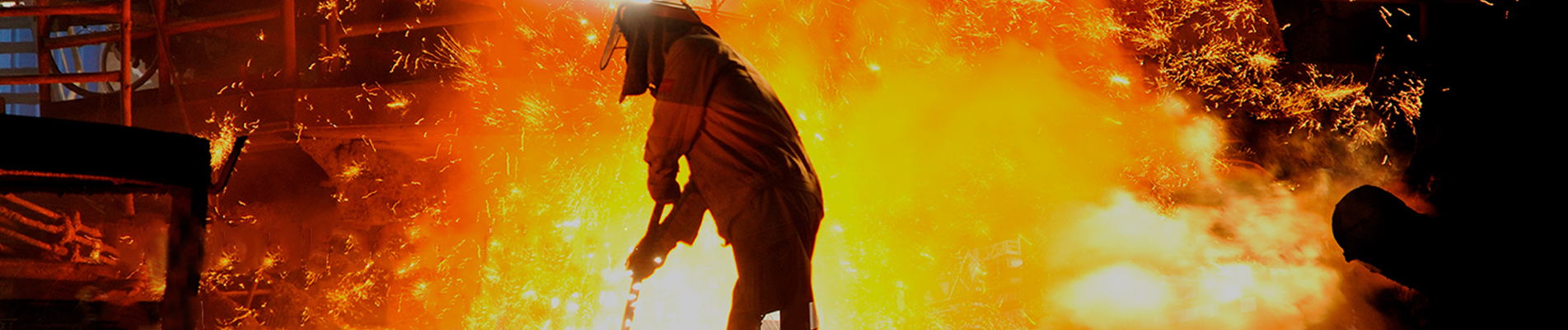
Wire reinforced fiberglass fabric can be used in a fabric expansion joint when a flexible textile layer needs more mechanical support than a comparable plain fiberglass cloth can provide. Typical reasons include vibration, repeated movement, vertical installation, handling during fabrication or maintenance, and the need to retain useful textile integrity after thermal exposure.
Metal reinforcement should not be added by default. Inserted wire changes weight, flexibility, cutting, sewing and edge-finishing requirements. It also does not make the fabric gas-tight, chemically resistant or capable of carrying the pressure load of a complete expansion joint by itself.
BSTFLEX supplies High Temperature Fiberglass Woven Fabric with Wire Insert for industrial thermal protection and supplies complete Non-Metallic Fabric Expansion Joints according to temperature, medium, movement, pressure and installation conditions.
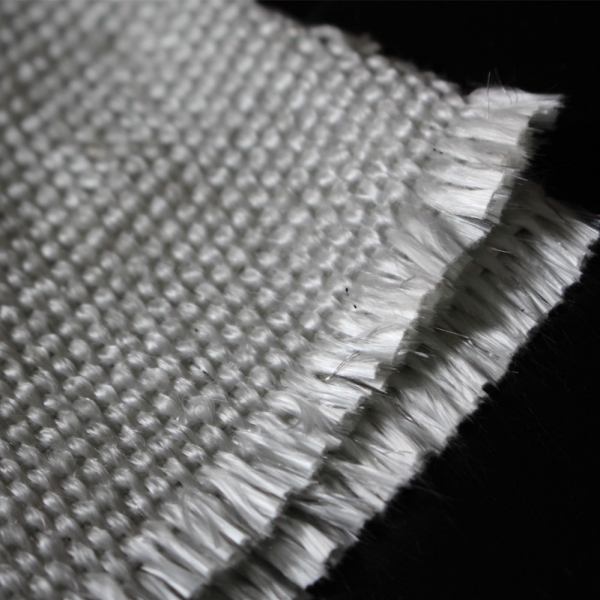
Wire reinforcement is worth evaluating when the fiberglass layer has a defined supporting function and the service conditions create mechanical demands that plain fabric may not meet with sufficient margin.
Common triggers include:
Wire reinforcement may be unnecessary where a plain fiberglass fabric already meets the specified strength, flexibility, temperature and service-life requirements. The correct decision comes from the layer function and operating duty, not from the assumption that more metal always means better performance.
A fabric expansion joint is normally a multilayer flexible assembly. Each layer may perform a different task, and the selected wire reinforced fabric should be assigned to one of those tasks on the construction drawing.
| Possible layer or component | Primary function | Is wire reinforcement automatically required? |
|---|---|---|
| Supporting fabric layer | Carries mechanical load within the flexible belt | No. It depends on calculated or qualified strength and retained properties. |
| Hot-side textile layer | Provides thermal protection near the process side | No. Temperature, abrasion and support requirements must be evaluated together. |
| Insulation-pillow cover | Contains insulation and maintains pillow shape | Sometimes, especially where vibration or repeated handling is significant. |
| Reinforcement around cuffs or flanges | Supports clamped and bolted areas | Application dependent; local reinforcement may be more suitable than reinforcing the entire belt. |
| Gas-sealing layer | Controls process-gas leakage | No. Inserted wire does not create gas tightness. |
| External weather cover | Protects against water, oil, UV and handling | Normally selected by coating and environmental performance rather than inserted wire alone. |
Where the proposed material is called a supporting layer, the designer should define the mechanical requirement. A general statement such as “use reinforced fiberglass” is not enough to compare suppliers or approve substitutions.
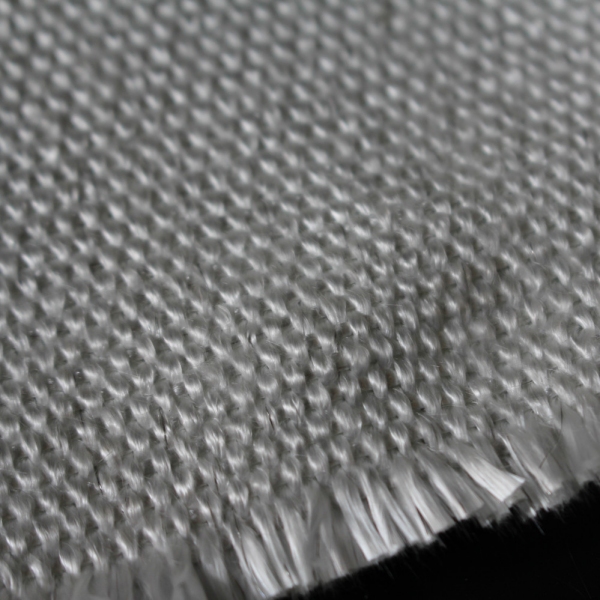
Wire inserted fiberglass fabric and separate stainless steel wire mesh can both appear in high-temperature expansion joint constructions, but they are not interchangeable.
Wire inserted fiberglass fabric is a woven textile containing metallic reinforcement within the fiberglass yarn system. It remains a flexible fabric that can be cut, sewn and integrated into a multilayer belt or insulation pillow.
Wire mesh is a separate metallic layer. It may be stitched to an insulation pillow, used for shape retention or positioned to protect insulation from the flow side. Mesh generally provides a different level of metallic support, stiffness and abrasion protection.
| Design point | Wire inserted fiberglass fabric | Separate wire mesh |
|---|---|---|
| Basic form | Flexible woven textile with wire incorporated into the fabric | Independent metallic mesh or netting |
| Primary role | Textile reinforcement and dimensional support | Mechanical retention, shape support or protective metallic layer |
| Cutting and sewing | Can be fabricated as cloth with adjusted tools and edge treatment | Normally formed, attached or stitched as a separate component |
| Gas sealing | Not provided by the inserted wire | Not provided by open mesh |
| Flexibility | Generally closer to a fabric layer | Depends strongly on wire diameter and mesh construction |
| Substitution | Requires review against the specified supporting-layer function | Cannot be replaced by wire inserted cloth without an assembly review |
An expansion joint may use both materials. For example, wire inserted fiberglass may act as a reinforced textile cover around an insulation pillow, while a separate mesh protects or retains the pillow in a defined position.
Before specifying metal reinforcement, identify the expected failure mode or performance requirement.
A large or vertically installed fabric panel can distort under its own weight, thermal cycling or repeated handling. Inserted wire may help the woven fabric maintain its shape, provided the reinforcement direction and complete construction match the load.
Fiberglass textiles can lose part of their original mechanical strength after sustained thermal exposure. A supporting layer should therefore be evaluated by the strength required in service, not only by its new-material tensile value.
Where retained strength is critical, request test data after representative thermal or chemical conditioning. The initial room-temperature value alone may not describe the material after service.
Expansion joints near fans, blowers, furnaces and process equipment may experience continuous vibration in addition to thermal movement. Wire reinforcement can provide additional textile support, but it does not remove the need to control belt geometry, liner clearance and local rubbing.
Large replacement belts and insulation pillows can be damaged during transport, installation or maintenance. A reinforced fabric may tolerate handling better, but the lifting, storage and installation procedure must still avoid concentrated loads and sharp edges.
If damage occurs where the belt contacts a liner, flange or duct edge, adding wire may not correct the root cause. The geometry and clearance should be inspected first. Reinforcement can support the fabric, but it should not be used to accept continuous contact with an improperly positioned metal component.
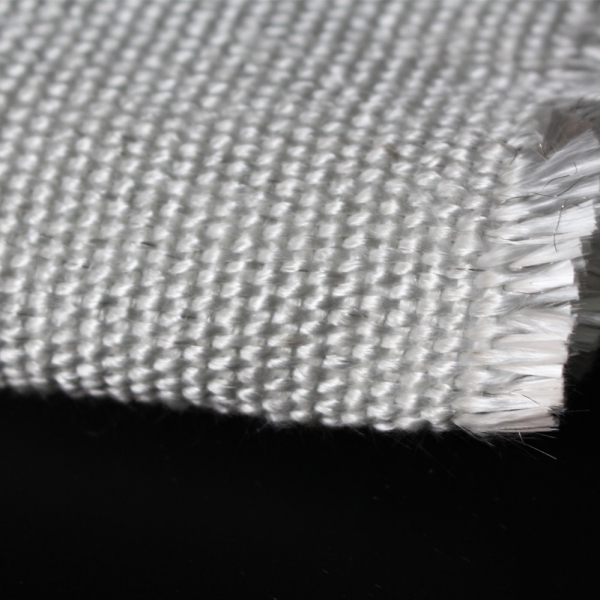
Plain fiberglass can be preferable when the required mechanical properties are already achieved without inserted wire. It can offer lower weight, greater drape and easier cutting and sewing.
Reasons to retain a plain construction may include:
The decision should compare the minimum qualified construction with the actual operating requirement. Adding wire without a defined purpose can increase cost and fabrication complexity without improving the performance that limits service life.
The current BSTFLEX wire inserted fiberglass product is described for high-temperature service above 1000°F / 538°C. The exact acceptable temperature depends on the selected construction, treatment, loading and exposure conditions.
The stainless steel wire should not be used as the temperature rating of the complete cloth. The fiberglass yarn, surface treatment, wire alloy and any coating all contribute to the usable range.
For an expansion joint inquiry, distinguish:
A high process temperature may be reduced before it reaches the supporting layer by an insulation pillow or other thermal layers. Conversely, an apparently moderate gas temperature may still create local hot spots through radiation, leakage or contact with a metal liner.
A fabric expansion joint carries pressure through the complete flexible element, seams, clamping areas and supporting geometry. The presence of stainless steel wire in one cloth layer does not establish the pressure or vacuum capability of the assembly.
Provide:
Under negative pressure, the belt may be pulled toward the flow liner or duct opening. Under positive pressure, the flexible element and attachment areas can carry outward load. The designer must review the active belt width, layer construction, seams, clamps and liner clearances together.
Wire reinforcement can change stiffness and bending behavior. It does not define how much axial, lateral or angular movement the expansion joint can absorb.
Movement capability depends on:
Do not approve a heavier or more strongly reinforced fabric without checking whether the resulting belt remains flexible enough for the required movement. A material that is stronger in a flat tensile test may still be less suitable for a tightly folded or repeatedly cycled belt.
Inserted wire may be incorporated in one yarn direction or according to another defined pattern. The fabric may therefore have different properties along the warp and fill directions.
The material specification should identify:
If the wire runs in only one direction, rotating the cutting pattern can change how the reinforcement supports the finished component. This should be controlled on drawings and cutting instructions rather than decided on the production floor.
“Stainless steel wire” is not a complete corrosion specification. Alloy selection may matter where the fabric encounters wet flue gas, condensate, salts, acids or cleaning chemicals.
State the medium, moisture level, dew point and possible condensate chemistry. If the wire can be exposed through a cut edge or damaged fabric area, the surrounding environment should be considered.
Do not assume that a corrosion-resistant wire turns the complete fiberglass fabric into a chemical barrier. The weave remains permeable unless another qualified sealing layer is included.
A supporting layer provides mechanical strength and stability. A gas-sealing layer limits leakage. The same material should not be assigned both functions without appropriate evidence.
Wire inserted fiberglass fabric can support another membrane in a multilayer expansion joint, but the inserted wire does not seal the weave. If the joint requires flue-gas tightness or another defined leakage level, specify the barrier material and the test method for the complete fabricated joint.
Check the areas most likely to affect leakage:
Increasing reinforcement cannot compensate for an unsuitable gas barrier or poorly sealed attachment detail.
An insulation pillow reduces the temperature reaching outer belt layers and helps fill the open duct gap around the flow liner. A wire reinforced fiberglass cover may be considered where the pillow needs additional support against vibration, handling or repeated thermal cycling.
The design should specify:
The pillow should not obstruct the required movement or be positioned so that wire, pins or mesh damage the flexible belt.
Rectangular joints concentrate movement and stress around the corners. A reinforced fabric may help support the construction, but the corner design remains critical.
Review:
Adding a full heavy reinforced layer may not be the most efficient solution if the problem is concentrated at the corner or clamping area. Local reinforcement can sometimes address the load while preserving flexibility in the active span.
Inserted wire affects textile fabrication. Production trials should be completed before approving a new construction for series manufacture.
Check:
Protruding wire can damage a gas-sealing membrane or injure installers. Cut edges should therefore be finished according to the approved construction rather than left untreated.
The sewing thread must be selected for its own temperature and mechanical load. A reinforced fabric does not protect a lower-rated seam from thermal or cyclic failure.
| Specification item | Information to request |
|---|---|
| Fiberglass construction | Filament or texturized yarn, weave and base fabric identification |
| Wire reinforcement | Alloy, diameter where relevant, placement and reinforcement direction |
| Finished weight | Nominal value and manufacturing tolerance |
| Thickness | Nominal value, tolerance and test method |
| Width | Usable roll width and edge allowance |
| Surface treatment | Plain, heat treated, vermiculite treated or other specified finish |
| Temperature data | Continuous and short-term limits with exposure conditions |
| Mechanical data | Tensile or tear values in both directions and applicable test methods |
| Conditioned performance | Retained strength after relevant thermal or chemical exposure where required |
| Fabrication guidance | Cutting, sewing, edge treatment and handling recommendations |
| Traceability | Material code, batch identification and agreed inspection documents |
Typical values and guaranteed minimum values should be distinguished. Where the layer is structurally important, the designer should define the required design value and safety margin rather than relying on a marketing description.
| Project condition | Recommended evaluation |
|---|---|
| Plain fabric has performed reliably | Do not add metal reinforcement without a new requirement or documented failure mode. |
| Fabric sags or distorts in vertical service | Review reinforcement direction, support spacing, fabric weight and installed geometry. |
| Repeated vibration damages the textile | Evaluate wire inserted fabric, but also inspect liner contact, pressure pulsation and attachment details. |
| Strength after high-temperature exposure is critical | Request retained-strength data after representative conditioning. |
| A gas barrier needs support | Use a defined supporting layer while separately specifying the qualified sealing membrane. |
| Only the clamping area is failing | Consider local cuff or flange reinforcement instead of reinforcing the entire flexible span. |
| The belt must fold through a small radius | Compare reinforced and plain prototypes for stiffness, seam bulk and cycle performance. |
| Heavy abrasive flow reaches the belt | Review the internal flow liner and clearances before relying on a stronger fabric. |
Before upgrading to wire reinforced fiberglass, document why the existing fabric failed.
Inspect for:
Different damage patterns require different corrective actions. A new reinforced cloth may help where the supporting layer lacked mechanical margin. It will not correct misalignment, inadequate active length, excessive movement, a sharp liner edge or the wrong gas-barrier material.
| RFQ item | Information to provide |
|---|---|
| Supply scope | Roll fabric, cut panels, pillow cover, replacement belt or complete expansion joint |
| Layer function | Supporting layer, hot-side textile, insulation-pillow cover or local reinforcement |
| Temperature | Process, design, excursion and expected fabric-layer temperatures |
| Medium | Gas composition, moisture, condensate, dust and abrasive particles |
| Pressure | Operating, design, negative, transient and surge conditions |
| Movement | Axial, lateral, angular, torsional and vibration data with cycles |
| Geometry | Round or rectangular size, installed gap, flanges and corner details |
| Reinforcement requirement | Wire alloy, direction, mechanical values or approved reference sample |
| Fabric specification | Yarn, weave, treatment, weight, thickness, width and tolerance |
| Fabrication | Thread, seams, splices, edge treatment and clamping details |
| Documentation | Data sheet, conditioned test data, inspection records and sample approval |
| Quantity | Prototype, maintenance replacement or production requirement |
No. Many joints can use plain fiberglass supporting layers when those materials meet the required strength, temperature and movement duty. Wire reinforcement should address a defined mechanical need.
Not by itself. Pressure capability belongs to the complete expansion joint construction, including all fabric layers, seams, clamps, geometry and supporting components.
It should not automatically be specified as gas-tight. The woven structure remains permeable. A separate qualified barrier may be required for the specified leakage level and process medium.
No. Wire inserted fiberglass is a reinforced woven textile. Wire mesh is a separate metallic layer used for retention, protection or support. They may be used together but are not direct substitutes.
No. More wire can add weight and stiffness and can complicate sewing and edge treatment. The reinforcement level should match the mechanical requirement and movement geometry.
Yes. It can be evaluated as a pillow cover or supporting textile where vibration, handling or thermal cycling justify reinforcement. The pillow, mesh, liner and flexible belt must still be designed as a complete system.
Request relevant values in both fabric directions, the test methods, minimum or typical status, and retained properties after representative thermal or chemical conditioning where those conditions affect the supporting layer.
Yes. BSTFLEX can evaluate roll fabric, fabricated textile components, replacement flexible belts and complete custom non-metallic expansion joint assemblies.
For roll material, send BSTFLEX the required temperature, reinforcement direction, fabric construction, thickness, width, quantity and intended layer function. Review the available Wire Inserted Fiberglass Fabric as the starting point.
For a replacement belt or complete assembly, provide process temperature, gas composition, pressure, movements, duct dimensions, flange details and photographs or drawings of the existing installation. BSTFLEX can assess the requirements through its Non-Metallic Fabric Expansion Joint range.
Other coated, uncoated, silica and reinforced textile options can be compared in the High Temperature Fabric category.
Contact BSTFLEX for material selection, sample review and quotation support. State whether the inquiry is for roll fabric, a fabricated supporting layer, an insulation pillow component, a replacement belt or a complete joint.

 English
 français
 Deutsch
 русский
 italiano
 español
 português
 Nederlands
 العربية
 日本語
 한국의
 Türkçe
 Polski
 Tiếng Việt
 Indonesia