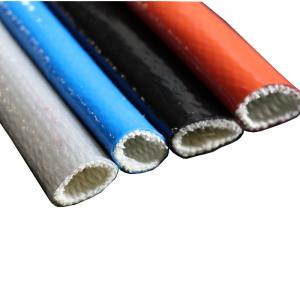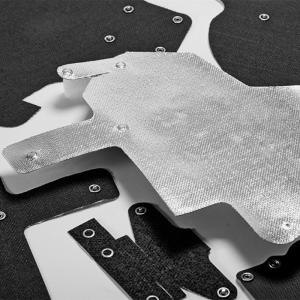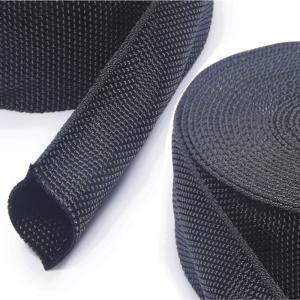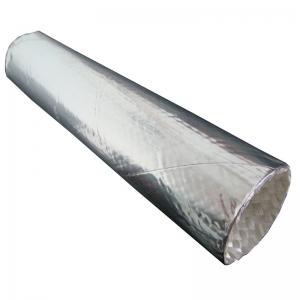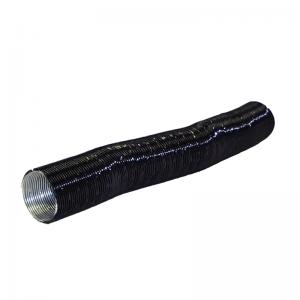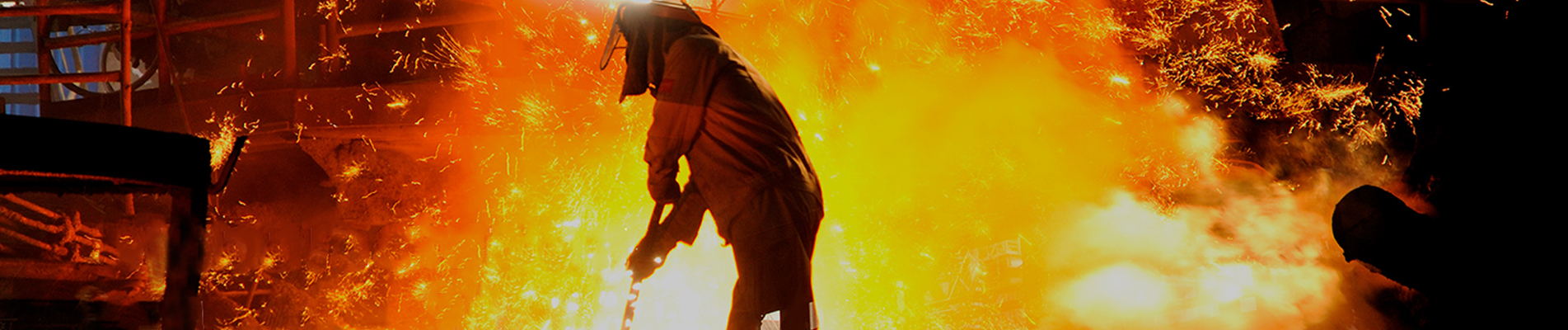
Adilatačná škára tkaninyje flexibilné spojenie inštalované v priemyselných potrubiach na absorbovanie pohybu medzi časťami zariadení alebo potrubí. Namiesto toho, aby sa do pevných oceľových konštrukcií vnášal tepelný rast, vibrácie alebo zmeny usporiadania, flexibilná časť sa pri pohybe systému deformuje.
Tkaninové kompenzátory sa bežne používajú v systémoch rozvádzajúcich horúci vzduch, výfukové plyny, spaliny a iné plynné procesné médiá. Ich flexibilný prvok môže pozostávať z tkaných technických tkanín, potiahnutých tkanín, plynotesných membrán, výstužných vrstiev a tepelnej izolácie zvolenej pre skutočné prevádzkové podmienky.
Pretože flexibilný prvok je nekovový, tento typ spoja sa tiež všeobecne označuje akonekovová dilatačná škáraalebodilatačný škár z nekovovej tkaniny.
Pre zákazkové priemyselné vzory pozriDilatačný spoj z nekovovej tkaniny BSTFLEX.
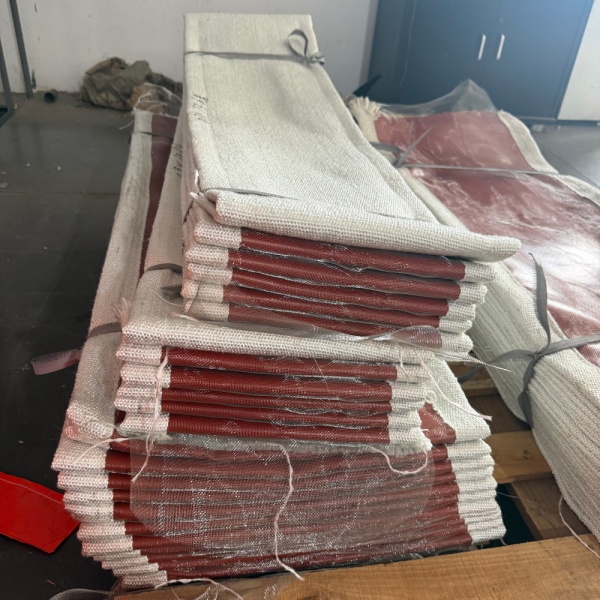
Tkaninový dilatačný spoj je technicky vytvorený flexibilný úsek umiestnený medzi dvoma relatívne pevnými časťami potrubného systému. Jeho účelom je umožniť kontrolovaný pohyb a zároveň zachovať požadované spojenie medzi týmito úsekmi.
Priemyselné potrubia počas prevádzky zriedka zostávajú rozmerovo nezmenené. Keď sa pec, kotol, výfukový systém alebo procesné potrubie zahreje, okolitá kovová konštrukcia sa roztiahne. Po ochladení sa opäť stiahne. Ventilátory a rotujúce zariadenia môžu tiež spôsobovať vibrácie, zatiaľ čo montážne tolerancie môžu vytvárať malé odchýlky medzi susednými komponentmi.
Ak sa tieto pohyby prenášajú priamo cez pevné potrubie, môžu vytvoriť dodatočné zaťaženie na:
Spoj tkaniny vytvára flexibilnú zónu, kde môže dôjsť k časti tohto pohybu bez toho, aby sa celá štruktúra potrubia správala ako tuhá zostava.
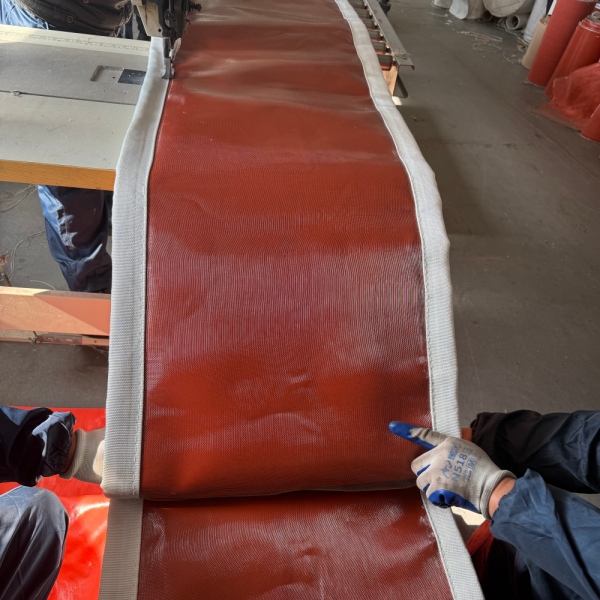
Termínnekovová dilatačná škáraopisuje skôr flexibilný prvok než každú súčasť v celej zostave.
Okolo spoja sa môžu stále používať kovové rámy, upínacie tyče, vložky alebo iné hardvérové prvky. Časť, ktorá vykonáva primárny flexibilný pohyb, je však vyrobená z tkaniny, elastoméru, potiahnutej textílie, laminovanej membrány alebo kombinácie týchto materiálov namiesto tvarovaného kovového mechu.
Toto rozlíšenie je dôležité, pretože tkaninové a kovové dilatačné škáry sa správajú odlišne.
Kovový vlnovec sa prispôsobuje pohybu ohýbaním vytvarovaných kovových závitov. Tkaninový dilatačný spoj využíva flexibilitu svojho textilného alebo kompozitného pásu na zmenu tvaru pri pohybe potrubia.
Pre veľké priemyselné potrubia, najmä tie, ktoré prenášajú plynné médiá s relatívne nízkym tlakom, môže táto konštrukcia poskytnúť značnú pohyblivosť v kompaktnom inštalačnom priestore.
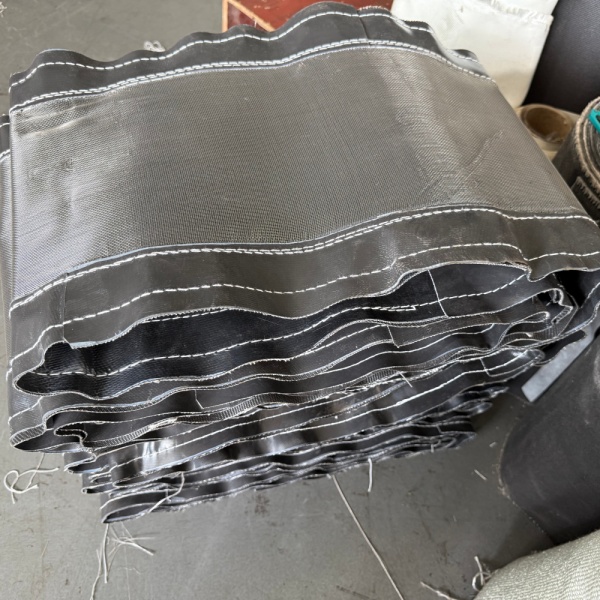
Základný princíp fungovania je jednoduchý.
Predstavte si dve časti horúceho potrubia oddelené kontrolovanou medzerou. Túto medzeru premosťuje flexibilný tkaninový prvok, ktorý je bezpečne pripevnený po obvode každej časti potrubia.
Keď sa potrubie zahreje a roztiahne, vzdialenosť alebo zarovnanie medzi týmito dvoma časťami sa zmení. Namiesto toho, aby sa tomuto pohybu bránil ako pevné spojenie, flexibilný pás mení tvar.
V závislosti od konštrukcie môže kĺb reagovať na niekoľko typov pohybu.
K axiálnemu stlačeniu dochádza, keď sa vzdialenosť medzi dvoma časťami potrubia pozdĺž stredovej čiary skracuje.
Toto sa často stáva, keď tepelná rozťažnosť spôsobí, že sa jedna časť potrubia posunie smerom k druhej. Flexibilný rozsah sa kontrolovaným spôsobom stláča alebo prehýba, aby sa prispôsobil skráteniu vzdialenosti.
Axiálne predĺženie je opačný stav. Vzdialenosť medzi spojovacími časťami sa zväčšuje pozdĺž pozdĺžnej osi.
Tkaninový prvok musí mať dostatočnú dostupnú geometriu na roztiahnutie bez nadmerného natiahnutia.
K bočnému pohybu dochádza, keď sa jedno potrubné spojenie posúva do strany vzhľadom na druhé.
Toto je obzvlášť dôležité vo veľkých potrubných systémoch, kde pohyb zariadenia, tepelný rast v inom smere alebo geometria inštalácie vytvára skôr posunutie ako jednoduché stlačenie alebo predĺženie.
Uhlový pohyb nastáva, keď dve spojovacie plochy už nie sú rovnobežné.
Flexibilný pás sa po obvode nerovnomerne deformuje, čo umožňuje jednej strane stlačenie, zatiaľ čo iná časť sa naťahuje.
Reálne priemyselné systémy sa nepohybujú vždy iba jedným smerom. Axiálne, laterálne a uhlové posunutie môže nastať súčasne.
Toto je jeden z dôvodov,dilatačný spoj textilného potrubiaje obzvlášť užitočný pri zložitých rozloženiach potrubí. Geometria spoja sa dá navrhnúť podľa očakávanej kombinácie pohybov, namiesto toho, aby sa každý posun spracovával samostatne.
Tepelná rozťažnosť je najznámejším dôvodom na inštaláciu dilatačných škár, ale nie je jediným.
Požiadavka na úplný pohyb môže byť dôsledkom niekoľkých prevádzkových podmienok.
| Príčina | Čo sa deje v systéme | Úloha dilatačného spoja |
|---|---|---|
| Tepelná rozťažnosť | Kovové potrubie sa rozťahuje so zvyšujúcou sa teplotou | Umožňuje kontrolovaný rozmerový pohyb |
| Tepelná kontrakcia | Potrubie sa počas odstávky alebo chladenia zmršťuje | Allows the system to return toward its cold position |
| Fan Vibration | Mechanical vibration is transferred from rotating equipment | Provides a flexible connection between equipment and ducting |
| Misalignment | Connecting duct faces may not be perfectly aligned | Can accommodate specified offsets within the joint design |
| Structural Movement | Supports or equipment may move relative to each other | Provides a controlled flexible section |
| Operating Cycles | Repeated heating and cooling creates cyclic movement | Accommodates repeated dimensional changes when correctly designed |
A fabric expansion joint should not be viewed simply as a piece of cloth connecting two ducts.
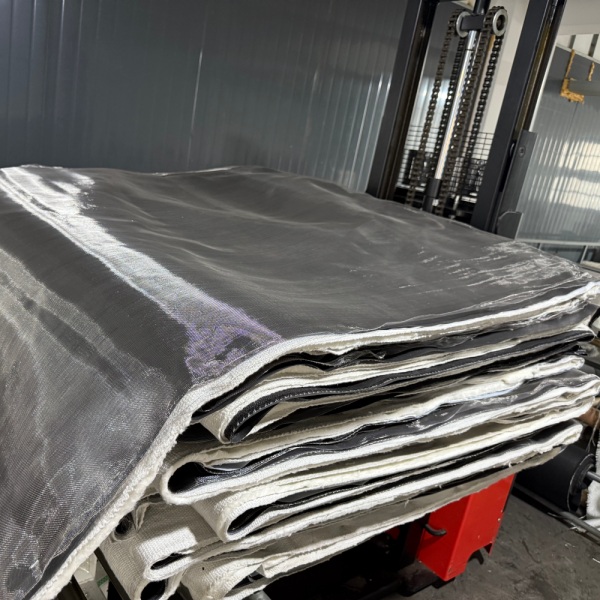
The flexible section is an engineered material system. Depending on service conditions, it may use a single flexible layer or several different layers, each selected for a specific function.
The outer layer forms part of the flexible envelope and may also provide resistance to weathering, environmental exposure or external mechanical conditions.
This layer helps contain the process gas. Its material must be compatible with the expected temperature, gas composition, moisture and chemical exposure.
Reinforcement provides mechanical support and dimensional stability to the flexible element. Fiberglass and other technical textile constructions are commonly considered depending on temperature and mechanical requirements.
High gas temperature does not necessarily mean every layer of an expansion joint should be exposed directly to that temperature.
An insulation package can reduce heat transfer from the process side toward temperature-sensitive sealing or outer layers.
Hot gas velocity, ash, dust or abrasive particles can damage an unprotected flexible surface. Some systems therefore require an internal liner, baffle or other protection to shield the joint from direct gas flow and particulate impact.
One material rarely provides every property required by a severe industrial application.
For example, a material with excellent temperature resistance may not provide the best gas sealing. A highly flexible sealing material may require reinforcement. A chemically resistant membrane may need insulation to keep its operating temperature within an acceptable range.
As a result, manyfabric expansion jointsuse a combination of materials rather than one fabric performing every function.
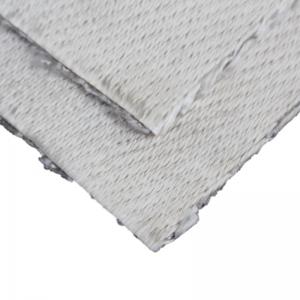
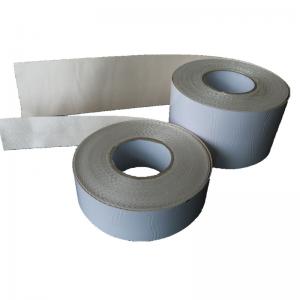
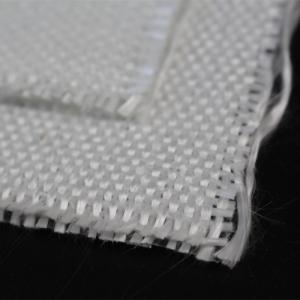
Typical material families include:
BSTFLEX also manufactures a broad range ofhigh temperature fabrics, allowing material construction to be evaluated according to thermal, chemical and mechanical requirements.
Fabric joints are mainly associated with industrial gas-handling and ducting systems rather than conventional high-pressure liquid piping.
Typical applications include the following.
Boilers, furnaces and combustion equipment can generate hot flue gases that must travel through large duct networks. These ducts experience significant dimensional change between ambient and operating temperatures.
Exhaust ducts connected to engines, industrial furnaces, thermal processing equipment or pollution-control systems may require movement compensation between hot equipment and downstream ducting.
Power plants use large gas-handling systems around boilers, fans, air-handling equipment and emission-control installations. Thermal growth and vibration can occur at multiple connection points.
Cement production combines heat, large duct dimensions, dust and continuous process operation. Flexible expansion sections may be required around kiln-related systems, fans and process ducts.
High-temperature furnaces, hot-air systems and exhaust ducts in steel and metal-processing plants can generate significant thermal movement.
Placing a flexible connection between rotating equipment and rigid ducting can help prevent all equipment movement from being transmitted directly into the surrounding duct structure.
Large ducting systems used with filtration, scrubber, flue-gas treatment and other air-pollution-control equipment often need flexible connections between process components.
Both products are intended to manage movement, but they should not be considered interchangeable simply because they share the term “expansion joint.”
| Characteristic | Fabric Expansion Joint | Metallic Bellows |
|---|---|---|
| Flexible Element | Fabric, coated textile or composite membrane | Formed metal bellows |
| Common Application | Large industrial ducts and gaseous-media systems | Industrial piping and engineered duct or process systems |
| Movement Method | Flexible belt changes geometry | Metal convolutions flex |
| Large Duct Sizes | Well suited to custom large cross-sections | Requires application-specific metallic design |
| Multidirectional Movement | Can accommodate several movement directions in one flexible section | Depends on bellows geometry and assembly design |
| Material System | Can combine several fabric, coating and insulation layers | Primarily determined by metallic alloy and bellows construction |
Pressure, temperature, process medium, movement, duct size and system design must all be considered before deciding which expansion joint technology is appropriate.
A flexible joint can help isolate vibration between connected components because its flexible element does not behave like a completely rigid metal duct section.
This is useful near fans, blowers and other equipment that produces mechanical vibration.
However, vibration should still be treated as an engineering input. Frequency, amplitude, equipment arrangement and joint geometry all influence performance. A fabric expansion joint should not be selected only because a system is described as “vibrating.”
There is no universal movement value that applies to every fabric expansion joint.
Movement capability depends on:
For this reason, axial, lateral and angular movements should be stated separately when specifying a custom expansion joint.
A request such as “50 mm total movement” is less useful than specifying how that movement occurs.
For example:
These values are examples of how movement information can be communicated, not standard ratings for every joint.
There is also no single temperature rating that defines all fabric expansion joints.
The allowable process temperature depends on the complete construction.
A high-temperature joint may be designed so that the process-side protection and insulation reduce the temperature reaching the gas-sealing membrane and external flexible layers.
Temperature selection should therefore consider:
This is why specifying only “high temperature fabric expansion joint” is insufficient for engineering selection.
A manufacturer needs more than the nominal duct dimensions to select a reliable construction.
The most useful project information includes:
| Design Information | Typical Details Required |
|---|---|
| Duct Geometry | Round, rectangular, square or special shape |
| Dimensions | Diameter or width and height |
| Face-to-Face Length | Available installation distance |
| Temperature | Normal and maximum process temperature |
| Pressure | Positive or negative operating and design pressure |
| Process Medium | Hot air, flue gas, exhaust gas or other process gas |
| Axial Movement | Compression and extension |
| Lateral Movement | Required transverse offset |
| Angular Movement | Required angular displacement |
| Chemical Conditions | Acidic, alkaline, moisture or other process exposure |
| Particulate Loading | Dust, ash or abrasive particles |
| Installation Environment | Indoor, outdoor, weather exposure or confined area |
Anon metallic expansion jointshould be considered when an industrial ducting system needs flexibility and the operating conditions are suitable for a fabric-based construction.
Typical reasons include:
The final decision should always be based on actual system conditions rather than the product name alone.
Some basic constructions can be standardized, but industrialfabric expansion jointsare frequently customized.
Two ducts with the same dimensions may require completely different expansion joints if they operate at different temperatures, carry different gases or experience different movements.
Important differences may include:
This is why drawings and operating data are particularly valuable when sourcing replacement or OEM fabric expansion joints.
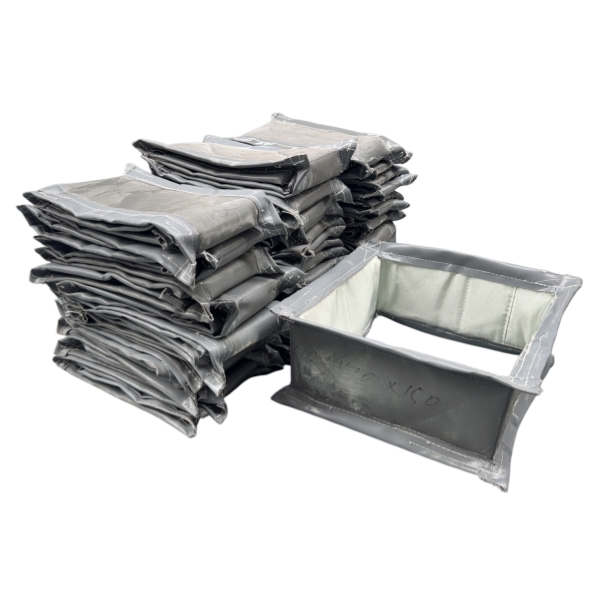
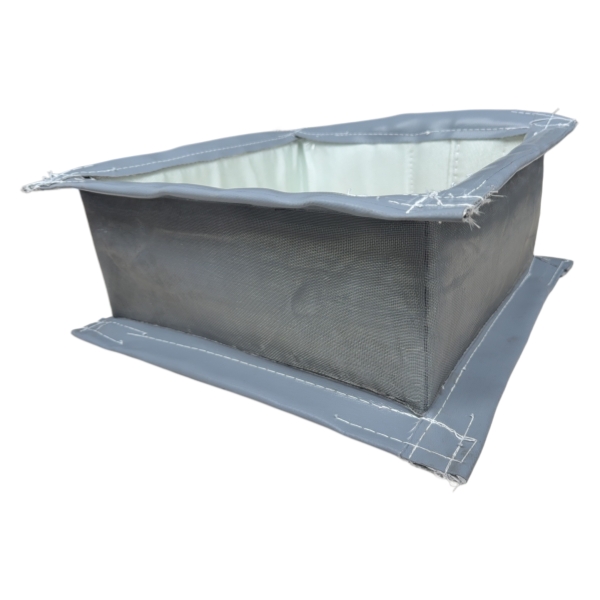
Rectangular joints are widely used on large industrial duct systems. Their corner sections require careful design because the flexible element does not deform identically along straight sides and corners.
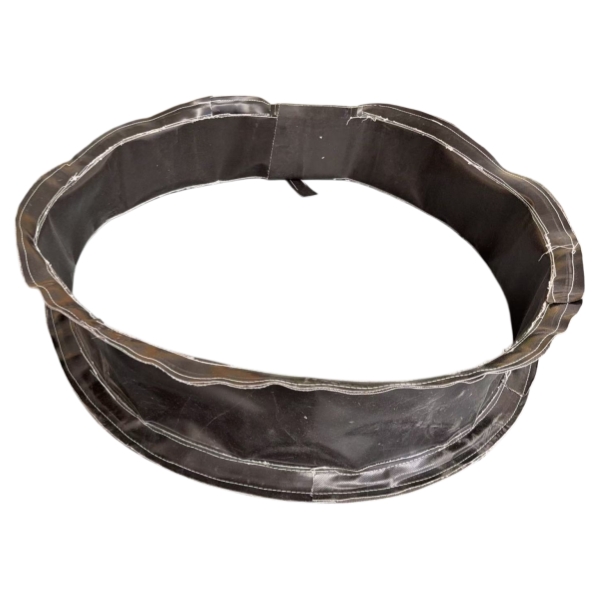
Round joints are used on circular ducting, fan connections and exhaust systems. The circumference provides a continuous attachment surface around the duct.
Square configurations are similar in principle to rectangular designs but may be required by specific duct or equipment layouts.
Transitions, non-standard dimensions and application-specific geometries can be manufactured when existing industrial equipment cannot accept a standard shape.
Expansion joint service life depends heavily on correct specification and installation.
Potential failure mechanisms include:
A damaged joint should therefore not automatically be replaced with an identical copy without understanding why the original unit failed.
For replacement projects, operating history can be as valuable as dimensional information.
In industrial ducting, the terms are often used for closely related products. A fabric expansion joint uses a flexible non-metallic fabric or composite element, so it falls within the broader non-metallic expansion joint category. The exact terminology varies by industry and construction.
It provides a flexible connection between sections of industrial ductwork so thermal expansion, contraction, lateral displacement, angular movement, vibration and specified misalignment can be accommodated without making the connection completely rigid.
Typical locations include industrial exhaust ducts, flue-gas systems, furnace and boiler ductwork, fan connections, cement plants, power-generation equipment, steel-processing facilities and air-pollution-control systems.
Yes. Depending on the design, they can accommodate axial compression, axial extension, lateral movement, angular movement and combinations of these movements.
No. Fiberglass is an important reinforcement and high-temperature textile, but complete expansion joints may combine coated fiberglass, PTFE-coated fabric, silicone-coated textiles, silica fabrics, insulation and other materials according to operating conditions.
Áno, keď je kompletný materiálový systém navrhnutý pre skutočnú teplotu procesu a plynové podmienky. Vysokoteplotné aplikácie často vyžadujú viacero funkčných vrstiev a vhodnú ochranu medzi prúdom horúceho plynu a flexibilným tesniacim prvkom.
Nie automaticky. Tkaninové a kovové dilatačné škáry majú odlišné tlakové, pohybové, teplotné a mechanické vlastnosti. Pred zmenou technológie dilatačných škár je potrebné vyhodnotiť podmienky systému.
Medzi užitočné informácie patrí šírka a výška alebo priemer potrubia, stavebná dĺžka, rozmery prírub, usporiadanie skrutiek, tvar spoja a dostupný montážny priestor. Dôležité sú aj požiadavky na prevádzkovú teplotu, tlak, médiá a pohyb.
BSTFLEX sa vyvíjadilatačné škáry z tkaninypre priemyselné potrubia, odsávanie, teplovzdušné a spalinové aplikácie. Konštrukciu je možné prispôsobiť okrúhlym, obdĺžnikovým, štvorcovým a neštandardným geometriám potrubí, pričom materiálové systémy sa vyberajú podľa teploty, tlaku, procesného média, pohybu a podmienok inštalácie.
Ak vyvíjate nový systém alebo vymieňate existujúci spoj, preštudujte siDilatačný spoj z nekovovej tkaniny BSTFLEXstránka produktu s dostupnými možnosťami konštrukcie a prispôsobenia.
Pre technické posúdenie pošlite rozmery potrubia, normálnu a maximálnu teplotu, prevádzkový tlak, procesné médium, axiálny pohyb, bočný pohyb, montážnu dĺžku, množstvo a dostupné výkresy.
Vyžiadajte si cenovú ponuku na dilatačný spoj z tkaniny na mieru

 English
 français
 Deutsch
 русский
 italiano
 español
 português
 Nederlands
 العربية
 日本語
日本語 한국의
한국의 Türkçe
 Polski
 Tiếng Việt
 Indonesia